
LEED: Pros and Cons
What does a LEED Certified building actually accomplish? Is it worth the trouble?

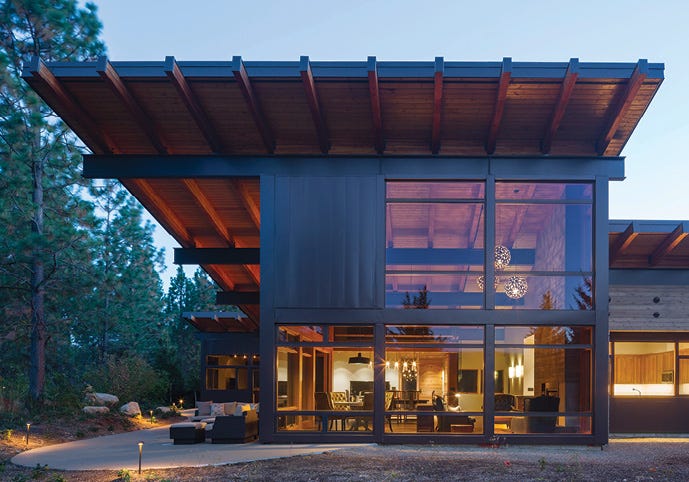
With the popularity of building green homes rising in recent decades, prospective buyers are becoming more aware of the benefits associated with the practice, and indeed there are many benefits to consider. LEED Certified buildings use less energy and water and are also much safer and healthier for the occupants and contractors that build them. Therefore, I thought it would be useful to go over all of the positive impacts that these buildings have, as well as document some of the negative aspects that don’t often get the same attention. I also want to talk a little bit about how LEED projects differ from conventional ones from the designer and developer’s perspective, because when executed correctly this process can make or break the efficacy of the building in the long run.
Cons:
I am going to start with some of the negative or more challenging aspects of building a LEED Certified home, mainly because these topics are not obvious to the homebuyer, especially if they are not directly involved in the building process.
Initial Cost
First off, getting a building LEED Certified will cost the contractor (or homeowner) a minimum of around USD$8000. This is for registration, precertification, and a combined design and build certification.
The financial impact of building a home is usually the first thing that comes to mind when a contractor looks to build, or a buyer seeks to purchase a home. One of the benefits of building a “conventional” style home is that this methodology is (often) centered around building the home with the lowest up-front costs for all parties involved. Now, there is conflicting evidence with regard to the initial costs of building green, with estimates varying wildly from a few percent cheaper overall, up to 15% more expensive than conventional homes. This variance is due to the difficulty in researching this subject with some studies focusing on single homes, and others taking entire housing complexes into account.
What is not generally examined is the scale of the projects, and the structure of the firm building them. For example, a large commercial contractor who is building a green apartment complex is going to have lower upfront costs for occupants than a one-off, single family home being built by a custom homebuilder. This is mainly because the commercial contractor will have a more streamlined project management process, as well as established supply lines and sources for materials, appliances, etc. So it would be unfair to compare one unit from the apartment complex with the custom single family home, simply because of how they were built. This is why there is such broad variation in the meta-analysis of green building versus conventional.
Maintenance
This is an interesting category in the green building space, and it could actually go either way depending on the location of the home, and what types of appliances are used. Newer technologies are often more complex than ones used in conventional homes, and this can sometimes lead to higher maintenance costs in the long run. This would be especially relevant if the home has smart monitoring systems for HVAC and water filtration as these systems require many sensors. Whenever these sensors wear out, they would need calibration and/or replacement, which would usually require a technician visit, unless the occupants are capable of doing it themselves.
That being said, some new technologies are actually much more efficient in the way that they operate, for example some smart HVAC systems will monitor the environment inside the home, and only ventilate, heat, or cool when necessary. This would certainly lead to the system being active much less often than a conventional system with a thermostat, and thus increase the lifespan of components like fans and filters.
Planning and Coordination
I would argue that the design and planning portions of the LEED Certification process are the most important by far but could also be some of the most difficult steps of the build. The reason being, LEED requires that the entire design and build process is streamlined among all of the parties involved. One of the prerequisites for obtaining a LEED certification is the Design Charette, which is just a fancy name for a design meeting. This could be a very difficult thing for a project to achieve, as it requires that all the contractors and subcontractors attend the meeting, and the entire build process is discussed among the team. LEED believes that this will ensure the project will go off without a hitch, and that all of the trades involved are aware that their contributions will be critical to success.
Anyone that has worked in the construction industry will see that this could be a tricky task to achieve. Many contractors are very busy, have fires to put out, and sometimes have the “she’ll be right” mentality that would “excuse” them from attending such a meeting. If contractors do not attend, and then proceed to makes mistakes that cause delays in the build further down the line, the sustainability potential of the project quickly begins to degrade. Remedial work (re-work) is often the most expensive work that happens on jobsites, with waste, labor costs, and scheduling delays adding up to create serious problems financially, not to mention the embodied carbon cost associated with the transportation of new materials and waste creation.
Operations
This is where the green home becomes more challenging for the homeowner. Because many systems involved in green building are not common among conventional homes, the person who ultimately lives in the home has to be educated on the correct operation of said systems, otherwise they will be much less effective in the long run, negating their potential value. Green HVAC, plumbing, and heating systems can sometimes be fairly complex, with return lines, heat pump water heaters, filtration, monitoring systems, etcetera. This is why another requirement of the LEED certification framework is that the main contractor responsible for the build must provide the homeowner with documentation of the entire home. This is an added layer of work for the contractor, as they have to keep track of all the green technologies that have been implemented in the home, so that down the line if the occupants run into any problems, or simply want to take on additions or renovations, they have all of the information they need. It also places some responsibility on the occupants to learn how to operate the home correctly, that way they can actually get the desired results that they paid for in the long run.
Pros:
So, the builder and occupants have completed the complex and rigorous design and build process, and the home has been LEED Certified! What can the occupants expect in return for all of the time and effort they put into making sure they live in a green home?
Durability (Resale Value)
This is in fact the main goal of the LEED Certification framework. The vast majority of points that can be scored in the building process are ones that create a home that is far more durable than a conventional one. Placement of the property is certainly taken into account, where the home cannot be build on floodplains, nor in areas prone to wildfires. LEED homes are better insulated, sometimes with spray foam that provides extra structural support. Over-insulating is useful for keeping the inside of the home warm and dry during the winter, and helping to keep cooler during the summer.
LEED homes also have much higher standards for permeability of the external envelope of the home, including the air/moisture sealing around doors and windows. This is another crucial element of durability as it reduces the overall possibility of moisture entering the interiors of the walls, and allowing mold growth. Couple these factors with the runoff mitigation, landscape/placement of trees, and ingress protection from pests, and you have a home that would be capable in theory of staying livable (and sellable) for a considerable amount longer than a conventional one.
Use Less Energy
Energy use is also a main focus of the LEED framework, with more points available in the energy category than any of the others. According to the USGBC website (citing a 2014 UC Berkeley study), LEED certified buildings use 25% less energy when compared to conventional homes. This is achieved by implementing passive solar heating, over-insulating the home, using Energy Star rated appliances, and many other methods. Considerable savings can also be attributed to the HVAC system, which sometimes incorporate ground source heat pumps, a form of local geothermal heating. Windows are also important, and the LEED program will award points for using highly insulated double glazing, and even triple glazing, but this can often get expensive very quickly.
On a side note, LEED does offer points for including solar panels in the design of the house, but I want to make it clear that this is NOT a large contributor to the energy efficiency of the structure. Solar panels are one of the most “visible” ways to show that the building is green, but the efficacy of solar energy varies widely depending on the location of the building. Solar has become more affordable in recent years, however the cost/benefit ratio is still a little bit shaky, where the overall cost of the required infrastructure might outweigh the amount of money you save in the long term. Plus, without a sophisticated battery system and kill switches to disconnect you from the grid, most residential solar panels actually shut off when there is a power outage, simply to keep utility workers safe. Overall the energy efficiency benefits of insulation, air-tightness, HVAC, appliances, and passive solar far outpace what is provided by solar panels.
Save Water
Water is absolutely the most valuable resource we have on Earth, and unfortunately we waste a LOT of water in residential buildings. The EPA has some startling numbers for water use in the USA; leaky pipes and faucets in the average family home account for over 900 BILLION gallons of wasted water EVERY YEAR. This can be avoided by making sure the plumbing contractor is correctly credentialed, and following the WaterSense certification on household taps, toilets, and appliances. The EPA also mentions that simply replacing those outlets in the main bathroom of the home can reduce water use by up to 20%, and it can pay for itself in just under a year, hence why LEED and other certification structures award points for installing low-flow fixtures. There are also some interesting new developments being made in the flushing toilet industry, with new pressure and vacuum-assisted toilets becoming more widely available.
Saving water is clearly going to be a hot topic in the coming decades, with many places in the US and around the world beginning to face more acute drought conditions on a regular basis. This may be one of the most important aspects of the LEED framework, and one that I feel should be taken very seriously.
Healthier Internal Atmosphere
In conventional homes, there are many things that can actually cause respiratory harm, especially when they are brand new. Carpet, flooring, drywall, paint, sealants, and cabinetry can all emit carcinogenic chemicals called volatile organic compounds (VOCs). This is a place where many points can be scored in the LEED framework, where choosing Low/No VOC products and formaldehyde-free wood products is advised. There are also benefits to air quality by choosing the correct size HVAC system for the house, and making sure that it is correctly ducted, and that the filters are the right size and rating. For smaller homes and units, mini-split air conditioners may be even more effective, as they can heat, cool, and ventilate the space all from one unit, and can also be strategically combined with traditional HVAC and smart monitoring for maximum efficiency. LEED also gives points for airing out/ventilating homes for a 48 hour period prior to occupation, thereby eliminating much of the airborne particles and chemicals that could cause problems down the line.
Reduce Waste
This is another important part of the overall design and build process. If all of the pre-construction plans are followed, the of amount waste reduced in a LEED Certified project can be considerable. Citing that 2014 study out of UC Berkeley, compared to conventional buildings, LEED projects created 48% less greenhouse gas emissions from the removal of solid waste. They also claim that by 2030, LEED projects as a whole will have diverted over 540 million tons of solid waste from ending up in landfills. As someone who has worked in the commercial construction industry, this holds a special place in my heart. I was always appalled at the amount of material that was willingly thrown away on construction projects, and I personally think this is a massive step in the right direction, if only the infrastructural sector would follow suit.
Improve the Community
The local benefits of having a LEED certified building in your neighborhood can be quantified, and in fact there are points to be scored here as well. LEED awards points for many aspects of both the positioning and function of the building, and how they affect the surrounding environment. Runoff mitigation is one major part, and certified homes have requirements that will slow rainwater enough that it does not add to the strain on storm water systems, like living roofs, rainwater harvesting, landscaping, and land contouring. In addition to runoff, LEED buildings can also gain points by improving local habitat for endangered species, planting native landscapes, and reducing the heat island effect around them, which improves the climate of the neighborhood overall. Points can also be scored by placing multi-family buildings near existing parks and public transportation hubs.
Conclusion
As with any construction project, there will always be a balance between financial constraints, personal preferences, and the willingness to get further up the certification scale. I personally think that with some smart planning and design, LEED Certified buildings can certainly provide huge benefits to the occupants and the planet, and that is why I find them so interesting.
If you made it this far, I commend your efforts, and thank you for reading this entire article. It was not easy to cram an entire book plus seven hours of lectures into one digestible piece of writing. I hope you learned something useful here, I know I have!
References:
https://1889mag.com/live/three-net-zero-homes-in-washington/
https://www.usgbc.org/leed/why-leed
Schifman, M. R. (2018). Building a sustainable home: Practical green design choices for your health, wealth, and soul. Skyhorse Publishing.
Little, B. (n.d.). Basics of Residential Green Building and Remodeling. Sessions 1-7. Retrieved February 2, 2022, from https://www.usgbc.org/education/sessions/basics-residential-green-building-and-remodeling-session-1-12848727.
https://www.usgbc.org/tools/leed-certification/fees
Mozingo, L. and E. Arens. 2014. Quantifying the comprehensive greenhouse gas co-benefits of green buildings. Final report prepared for CARB and CEPA. www.escholarship.org/uc/item/935461rm
https://www.epa.gov/watersense/statistics-and-facts#:~:text=Water%20Stats,gallons%20of%20water%20annually%20nationwide.